

Trying to pick ITIL 4 Foundation training can feel odd when a $7 app sits beside a two-day class costing up to $1,695. The right choice depends on your time, budget, and need for live help. Here are 10 options, with a clear use case and caveat for each.
1. FindExams, practice-focused preparation for ITIL 4 Foundation
FindExams is an online exam preparation platform built around practice tests, question banks, exam simulators, and performance tracking. It fits learners who already know the basics but need a clear way to measure readiness.
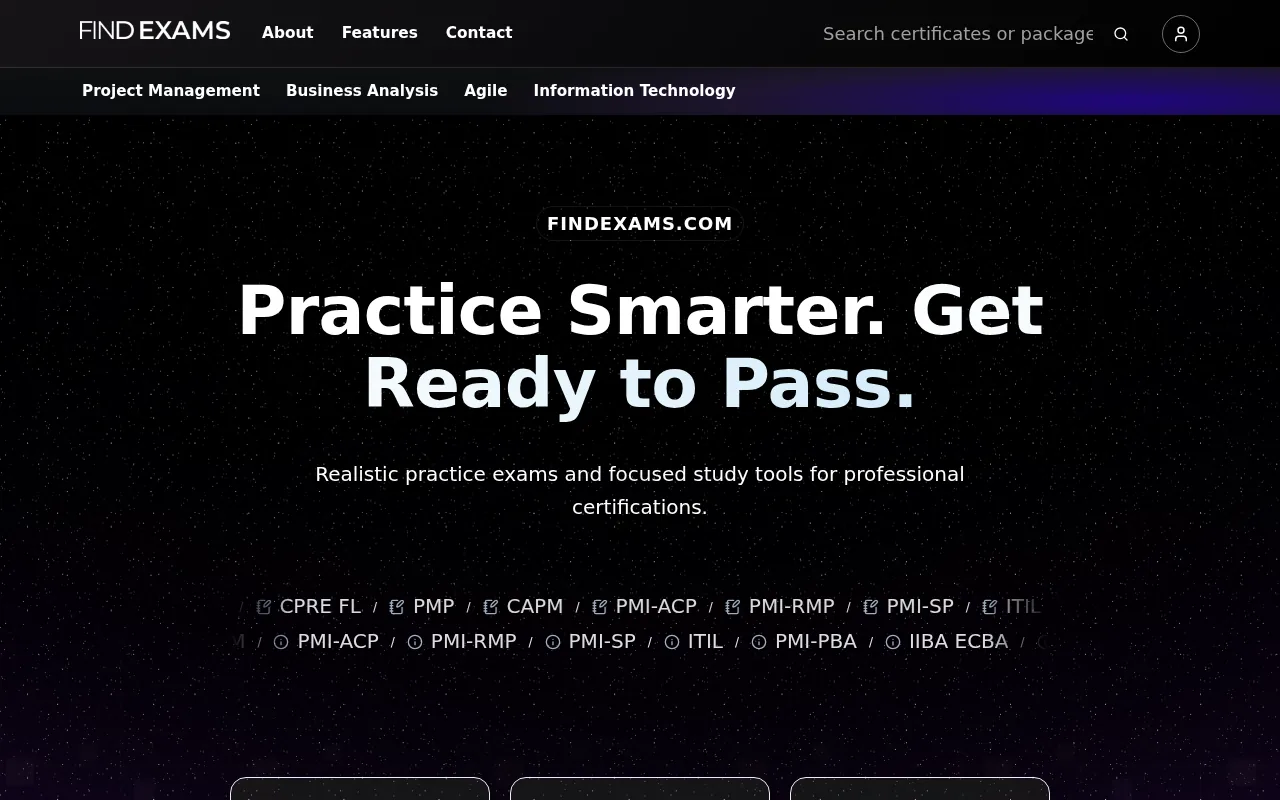
The main strength is repetition with feedback. You can work through questions, review weak areas, then return to those topics in a timed session. That matches the exam's short multiple-choice format better than passive reading alone.
Use the ITIL 4 Foundation practice exams and study guide when you want one place to check your level and build a study routine. FindExams is also a good fit if work shifts make a fixed class hard to attend.
The caveat is simple: a practice platform won't replace a full course if you need a teacher to explain every concept from scratch. Pair it with the official syllabus or a trusted class when your knowledge is still thin.
2. ITIL 4 Foundations class, two-day training with exam inclusion
This class is an online option for people who want formal ITIL 4 Foundation training and an exam included in the fee. It is best for university employees who can use staff development funds, though non-university learners can also enroll.

The listed price is $637 per university employee and $1,695 for non-university participants. The two-day format covers service management, guiding principles, the four dimensions, the service value system, and service management practices.
That structure helps when you need a firm deadline. You also get training materials and the exam. Before paying, confirm the next class date, delivery mode, and current fee. Course details can change.
For exam rules and scheduling details, check the official PeopleCert ITIL 4 Foundation page in a new tab.
The tradeoff is cost. A live class gives you a set schedule, but it may be hard to justify when you only need practice and exam pacing.
3. ITIL V4 app, low-cost mobile practice with 200 questions
The ITIL V4 app is a low-cost mobile practice choice for learners who study in short blocks. It is best for reviewing terms during a commute, lunch break, or gap between work tasks.

Mobile practice works well for recall. It can help you spot terms you keep missing, then prompt a return to the textbook or course material. It is less useful as your only resource because the available details do not show a full curriculum, instructor support, or course length.
You can view the app listing on a mobile app marketplace in a new tab. Check the current device support and purchase terms before you pay.
Choose this option when price and access matter most. Don't mistake a large question count for full exam readiness.
4. Jason Dion's ITIL 4 practice questions, online mock-exam reinforcement
Jason Dion's ITIL 4 practice questions are online practice exams for learners who want harder test-style drills. They are best used after you understand the main terms and framework parts.

A learner transcript describes six practice exams and says the questions felt harder than the actual test. That can be useful. Tough questions force you to explain why one answer fits instead of relying on word recognition.
Use each mock exam as a review tool, not as a score contest. Read every explanation. Write down the concept behind each missed answer, such as warranty, value streams, change control, or incident management.
The available listing does not disclose the full question pool or a course length. That gap makes it harder to judge how much total study time you'll get. Buy it only if you already have a separate source for the framework.
5. Live instructor-led ITIL 4 Foundation training, guided classroom support
Live instructor-led ITIL 4 Foundation training gives you a teacher, a timetable, and a place to ask questions. It is best for learners who lose momentum when studying alone.

A good live session should connect the framework to work. For example, an instructor can show how an incident differs from a problem, or how a service request moves through a support workflow. That link helps you recall the idea when a scenario question changes the wording.
Look for a syllabus that includes the service value system, guiding principles, four dimensions, service value chain activities, and core practices. Ask if the exam fee, study materials, and retake terms are included.
The main limit is scheduling. If you miss the class, you may lose the chance to ask about the exact point that confused you.
6. Self-paced online ITIL 4 Foundation training, flexible study around work
Self-paced online ITIL 4 Foundation training lets you study around work rather than around a class calendar. It is best for people who can set their own weekly targets and review missed concepts without a teacher present.

A useful self-paced plan should cover the exam syllabus in order. Start with service management concepts. Then study the guiding principles, four dimensions, service value system, service value chain, and practices.
Set a small weekly target. For example, spend the first block learning terms, the next block applying them to scenarios, then use timed questions to test recall. Keep a missed-question log. If you miss the same topic twice, stop taking new tests and review that topic.
The weakness is data risk. Many self-paced listings don't state course length, question volume, or the depth of exam support. Confirm those points before enrollment.
7. ITIL 4 Foundation bootcamps, intensive preparation for a fast deadline
ITIL 4 Foundation bootcamps compress study into a short period. They are best when an employer, project, or job application gives you a firm exam date.

Bootcamp outlines commonly place the framework overview first, then move through guiding principles, the service value system, key practices, and exam review. Some also include group or individual study time. That sequence can reduce the risk of skipping a major topic.
Ask what happens after the class ends. You may need access to a practice exam, a voucher, or a retake policy. Also ask how much reading is expected before the first session.
Fast training is useful, but it can move too quickly for someone new to IT service management. If terms such as utility, warranty, outcome, or value stream are unfamiliar, add review time after the bootcamp.
8. ITIL 4 Foundation study plans and full-length mock exams, structured revision
A study plan paired with full-length mock exams gives you a clear path from first review to final readiness. It is best for self-learners who need milestones instead of open-ended study.

Use a three-part rhythm. First, learn the terms and framework parts. Next, answer topic-based questions. Once your weak areas are clear, take full timed exams and review every error.
Don't treat one good score as proof that you're ready. Look for stable results across different question sets. FindExams can help here because its simulator format lets you track performance instead of relying on memory.
9. ITIL 4 Foundation voucher and discount options, enrollment and cost checks
Voucher and discount options can lower the cost of your ITIL 4 Foundation training path, but you must check what the voucher includes. Some purchases cover only the exam. Others bundle training materials or a retake.

Before checkout, confirm these points:
- Is the exam included?
- How long is the voucher valid?
- Can you reschedule?
- Is a retake available?
- Does the country where you sit the exam affect the price?
PeopleCert states that rescheduling rules depend on how close you are to the exam start time. Read the current terms before choosing a date. A cheap voucher is less helpful if you can't use it when work changes your schedule.
Also compare the full cost, not the headline discount. Add the exam, course, practice tests, and any retake fee before deciding.
10. ITIL 4 Foundation training comparison, options for Agile, DevOps, and service careers
The best format depends on the job you want to do after the exam. ITIL 4 can support work in service desks, operations, project teams, Agile delivery, DevOps, and service management. The certification gives you shared terms, but your study method should match your next task.

| Option | Best fit | Main strength | Watch for |
|---|---|---|---|
| FindExams | Practice-led learners | Timed questions and readiness tracking | Pair it with theory if you're new |
| University class | Staff development and formal study | Two-day schedule with exam inclusion | High external-participant cost |
| ITIL V4 app | Budget learners | 200 mobile questions at $6-$7 | Limited course detail |
| Jason Dion's questions | Mock-exam practice | Online exam reinforcement | Question pool details are unclear |
| Live class | Accountability seekers | Teacher support and discussion | Fixed schedule |
| Self-paced course | Busy professionals | Study around work | Support and depth vary |
| Bootcamp | Fast deadlines | Concentrated review | Little time for slow learners |
If you plan to work with Agile or DevOps teams, focus on value, feedback, change, and collaboration. If you want a service desk role, give more time to incident management, service requests, and customer outcomes. Your first credential can later lead toward advanced paths such as Managing Professional or Strategic Leader, depending on the current certification rules.
Conclusion
Choose FindExams if you want flexible practice with clear readiness signals. If you need a teacher and an included exam, compare the university class. If budget is your main concern, start with the mobile app, then add stronger mock testing. Begin with the free FindExams trial and use your first results to set your study plan.
